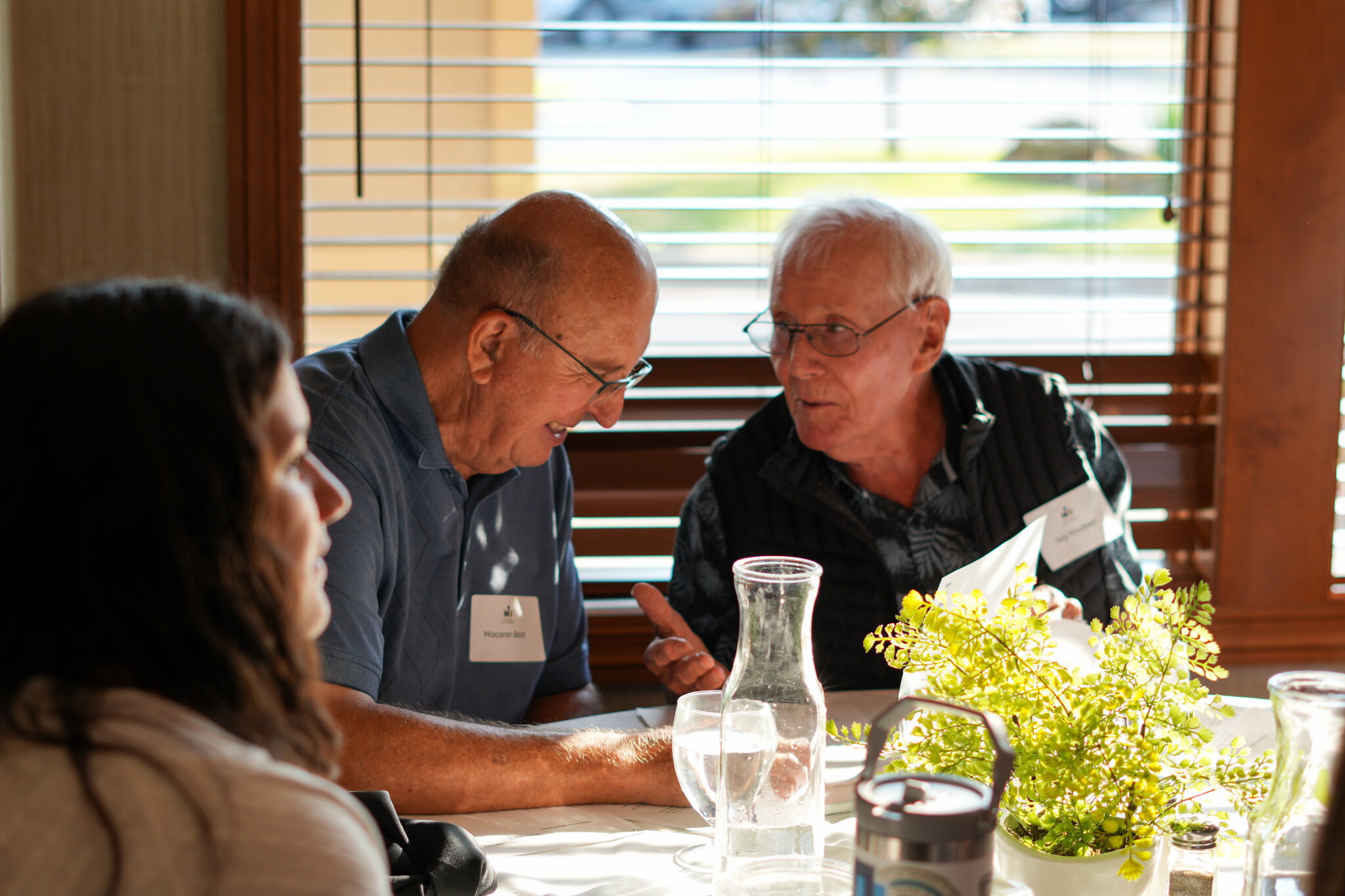
The “Minnesota: Land of Neighbors” project listening session series made its way to Lake City on Tuesday.
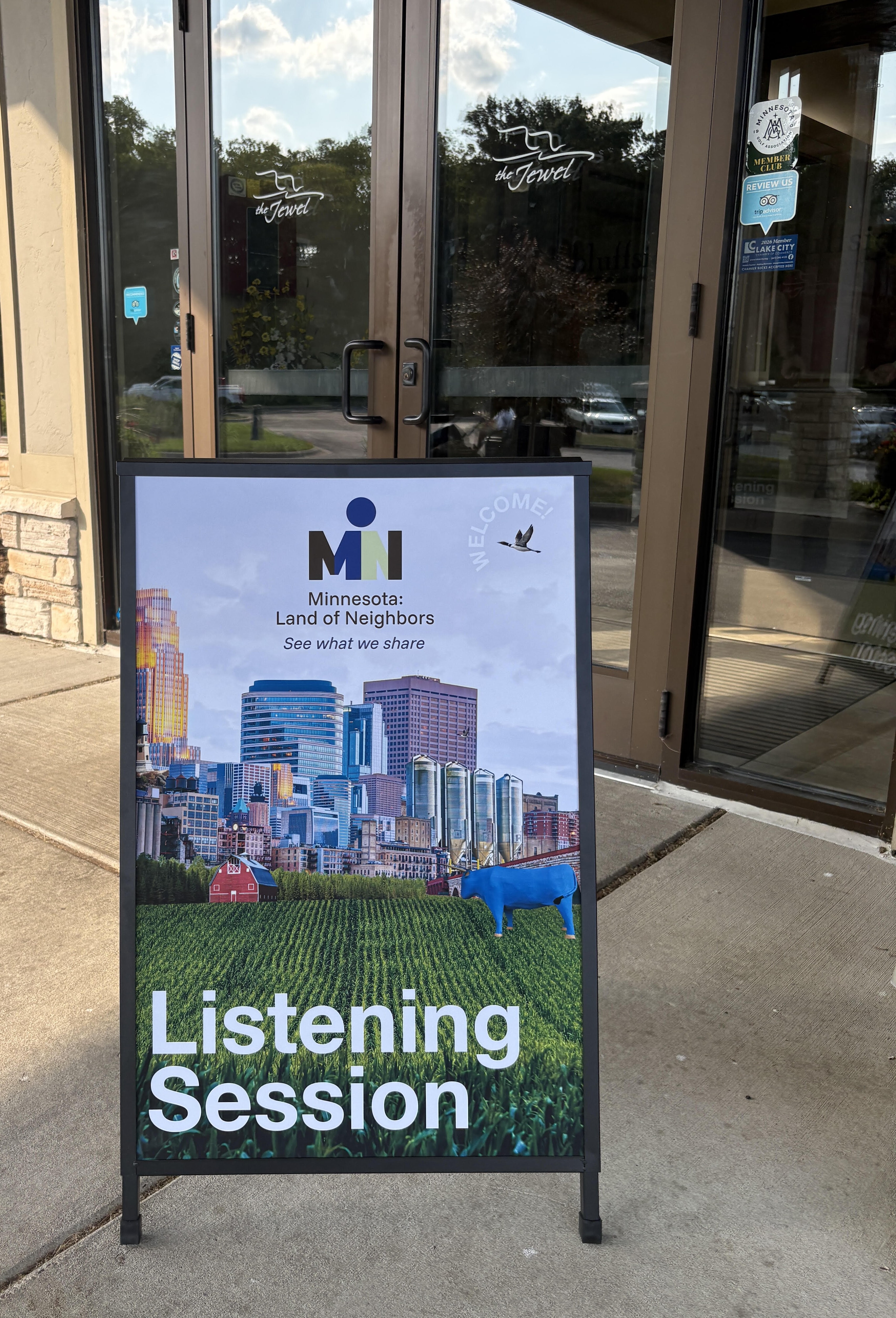
Organizers of the “Minnesota: Land of Neighbors” project held their third listening session in Lake City in southeastern Minnesota on Tuesday, Aug. 18. Previous listening sessions have been in Fergus Falls and St. Paul.
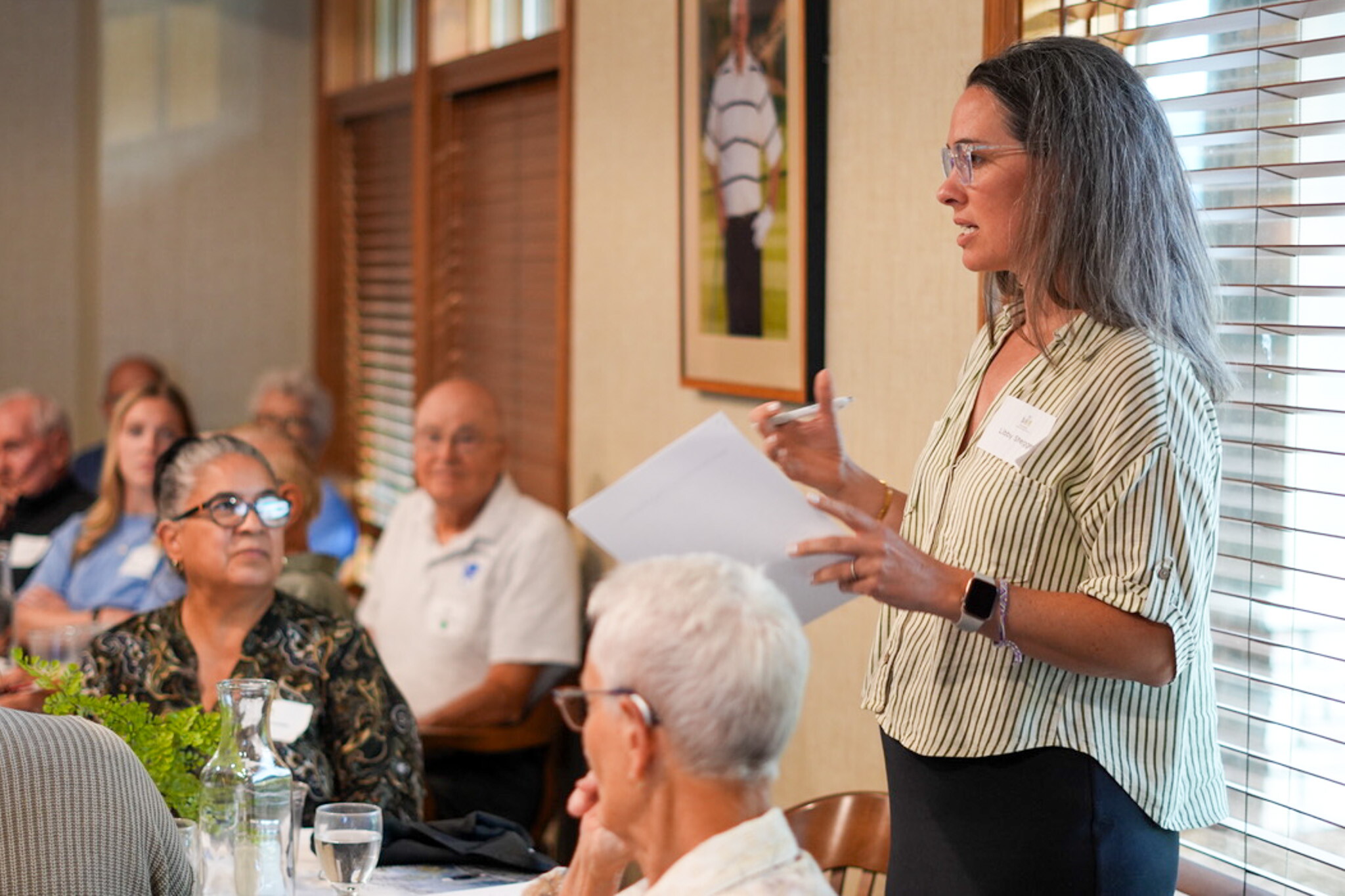
Libby Stegger, executive director of Civic Bridgers, a nonpartisan nonprofit organization co-leading the “Minnesota: Land of Neighbors” project, described her table’s discussions at the project’s listening session in Lake City on Tuesday.


LAKE CITY, Minn. — More than 30 people gathered in Lake City on Tuesday, Aug. 18, to discuss what it means to be neighbors in their corner of southeastern Minnesota.
What emerged was a strong allegiance to working together in community groups, a love of a small-town lifestyle, and a belief that it’s important to check on your neighbors and help when you can — despite political differences, which often go unspoken.
“It was about what we appreciate about community, so that was refreshing ... just to realize all the good things people do in our community,” said attendee Tom Kregel, a retiree and this year’s president of the local Kiwanis club.
This was the latest listening session of “Minnesota: Land of Neighbors,” a project funded by a coalition of the state’s largest philanthropic organizations to examine the ties that still bind Minnesota together despite social upheaval and political polarization.
The group that gathered at the Jewel Golf Club in Lake City was older, including many retired professionals. They represented some, but not all, of the area and Lake City’s 5,300 residents.
The town is nestled along the broad shores and forested bluffs of Lake Pepin, in a town one attendee described as a place with low crime, familiar faces and unlocked doors. But attendees also came from towns in the surrounding area, including Red Wing, Winona and Rochester.
The Land of Neighbors discussion leaders organized the room’s conversations around three levels of neighbors (roughly: neighborhood, town and state), and asked attendees what values they shared with those neighbors, how they help each other, how they deal with disagreements, and how they relate to outsiders.
Many attendees at the Lake City event emphasized the local importance of involvement with civic and service organizations, such as the Greater Lake City Community Foundation, Kiwanis and Rotary. Many described a practice of checking in on neighbors and helping whenever they could.
Several attendees also spoke highly of their local newspaper, the Lake City Graphic, for its attention to community topics and events. Some mentioned avoiding conversations about politically touchy or polarizing issues to get along.
“People are hungry for the conversation,” said Libby Stegger, executive director of Civic Bridgers, one of the organizations leading the Land of Neighbors project. “They’re hungry for neighborliness and to think about what’s great about the state and what we share, as well as dig under the surface about what’s driving some of the tensions and what we can do about it.”
Kregel said local organizations are important, but attendance has shrunk as members pass and new members prove hard to find — matching a national trend in declining membership in civic and fraternal organizations such as the Masons and Rotary.
Several members of a three-times-a-week morning coffee group at Big Bear Pizzeria in Lake City showed up for the event. Kregel, who is a member, describes it as a good place for the kind of conversation that helps everyone generally get along better and avoid the national trend toward polarization and division.
“Just being with people, we get kind of our rough edges knocked off, and because there’s an affection that develops. It’s just like being married,” said Kregel (who is married) with a chuckle. “You can’t get too weird if you’re married because your wife won’t let you — she’s going to knock off all the rough edges.”
The Lake City gathering, co-hosted by The Lake City Braver Angels Alliance and the Southern Minnesota Initiative Foundation, was the third in a series, with previous sessions held in Fergus Falls and St. Paul in July.
Organizers, who describe the project as a multi-year effort with more sessions planned around the state in the coming months, have said they’re listening before settling on action steps.
Near the end of the session, one attendee quietly slid a handwritten page to Forum New Service. It read, “We’re as divided as we’re told we are.” Asked about it, the writer said news coverage dwells on conflict, focusing on the sharp disagreements between those on the far edges of the polarization spectrum, while often ignoring the vast majority of people who are in the middle on many issues.
Those people should get a voice too, the writer said.
“In an environment where the media naturally is going to tell stories about those differences, we can also, as Minnesotans, be telling the stories of connection,” Stegger said. “Those things can live side by side and help us remember our humanity when we’re feeling really divided or far apart.”